A data driven special
wildfire
rising
Raging
The story of scorched earth and ever
growing risks
Text: ChatGTP Photos: Pexels, Freepik
Wildfires have become an increasingly visible and destructive force in recent years, capturing headlines from California to southern France. They test ecosystems and human resilience: are we ready for the next inferno?
an
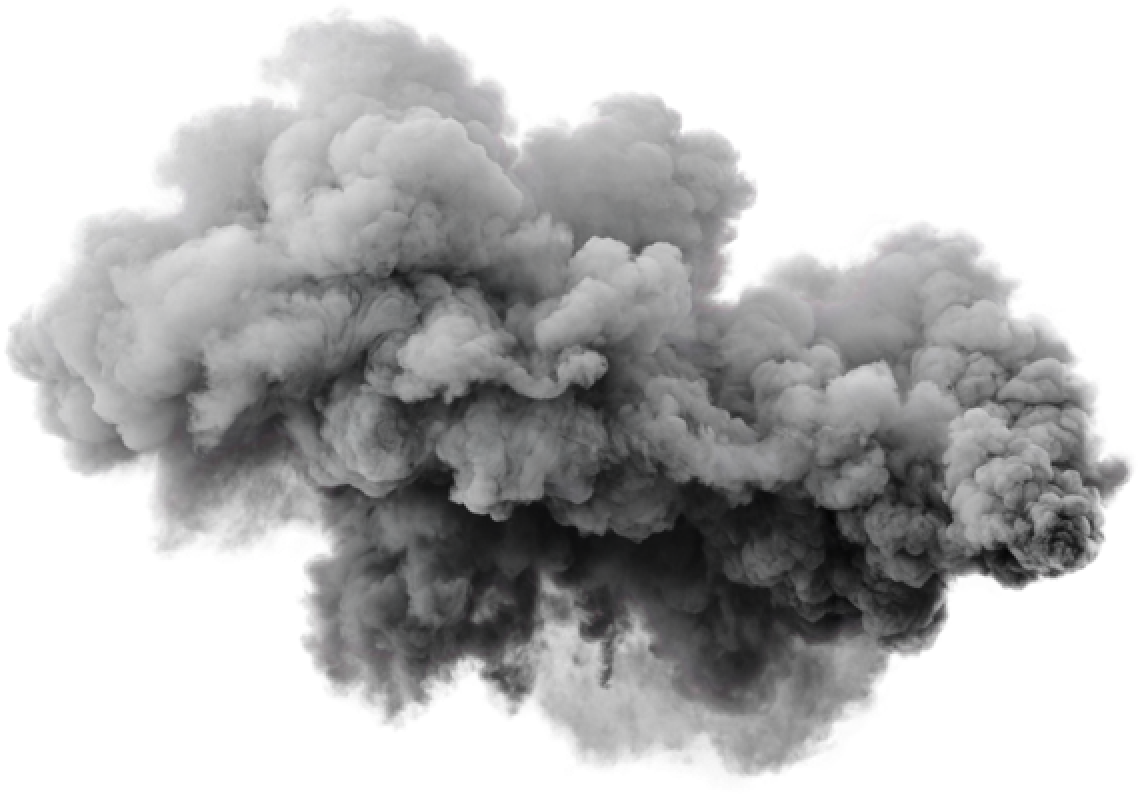
Wildfires behave differently depending on the terrain. In grasslands, flames can race ahead with the wind. In forests, they may creep along the ground before exploding into the treetops. Shrublands often ignite in sudden, intense bursts. The type of terrain of the landscape determines both the speed and the scale of the fire.
Temperatures within the flames can exceed 1,100°C, enough to destroy flora, fauna, and topsoil. In Los Angeles, for example, the combination of chaparral-covered hills and strong Santa Ana winds has historically created a perfect recipe for rapidly spreading fires.
Wildfires are uncontrolled fires that occur in natural landscapes. Unlike controlled burns, which are carefully managed by forestry services, wildfires spread unpredictably, consuming vegetation and even entire ecosystems.
Tracing the origins
How the flames ignite and spread across landscapes
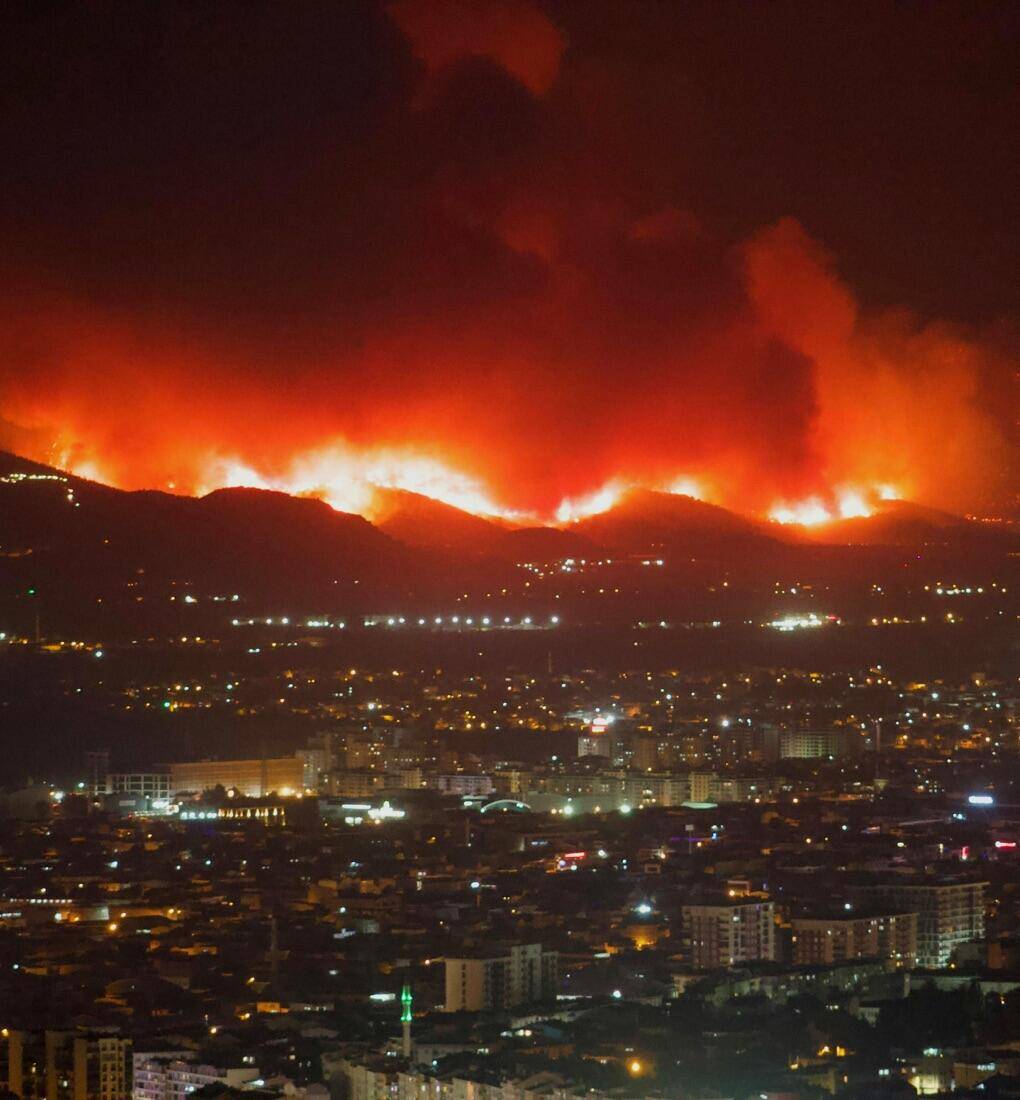
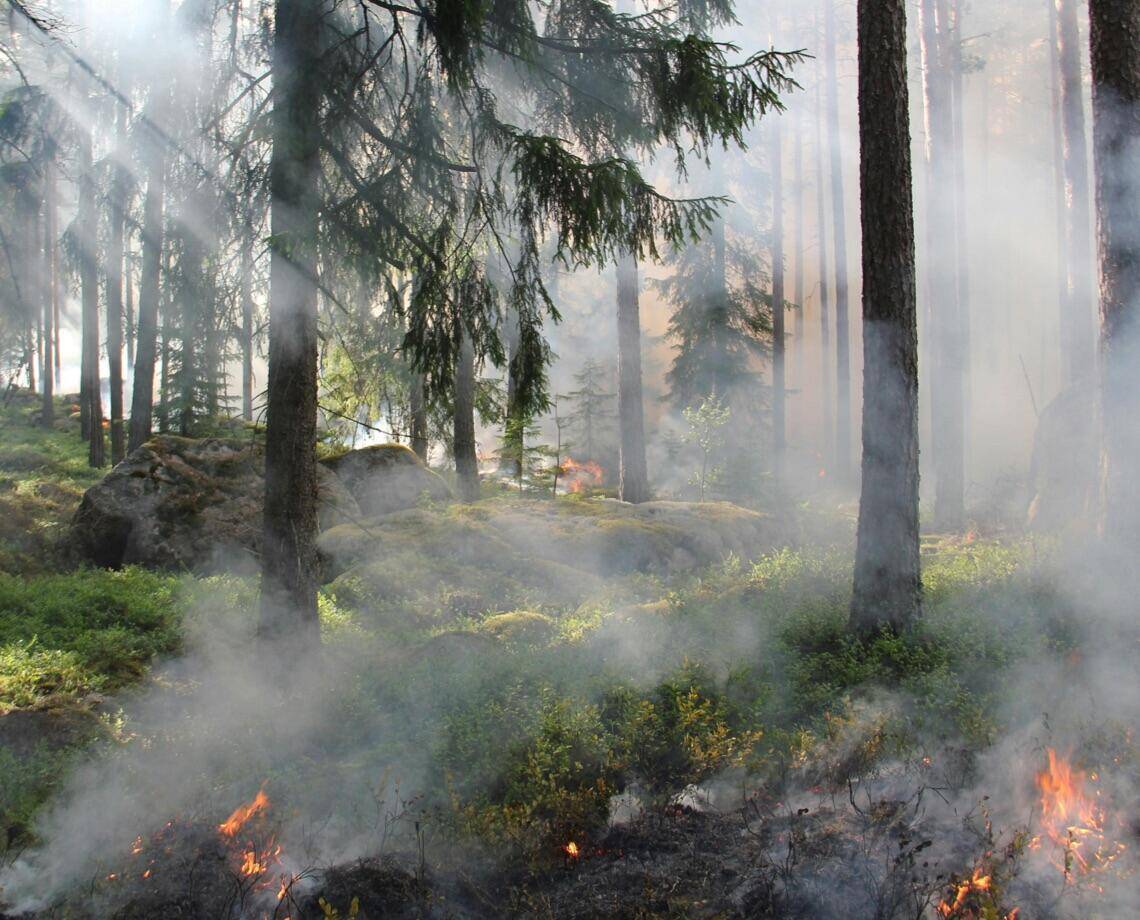
Wildfires ignite through a combination of natural and human-induced causes, each contributing in different ways depending on region and season.
From spark to inferno
Wildfire
causes
Lightning strikes are among the primary natural triggers, accounting for roughly 10–15% of wildfires worldwide., while volcanic activity and decaying vegetation can also ignite flames. In remote regions, these blazes often spread for days before they’re detected.
Arson accounts for 5–10% of wildfires globally. Although less frequent than accidental fires, deliberately set fires can escalate rapidly under dry conditions.
In many regions, human activity is the leading cause of wildfires. In California, estimates suggest that around 85–90% of fires are sparked by accidents, such as unattended campfires, discarded cigarettes, power line malfunctions, or agricultural burns that escape control.
Intentional acts
Human accidents
Natural causes
The aftermath
After the dust settles: what wildfires leave behind
The spendings of U.S. Forest Service
on wildfire suppression alone
$ 3,000,000,000
Technological monitoring
Wildfire costs by Country
The correlation between average global temperatures, annual acres burned and number of wildfires over 50 years
While firefighting focuses on containing flames, the greater challenge lies in preventing wildfires before they ignite and preparing communities to withstand them.
Staying ahead of the flames
The anatomy of a wildfire
Wildfires have distinct zones that interact in powerful ways.
Flames and heat shape the spread of the fire while smoke carries pollution and burning embers far beyond the front line.
Wildfires are more than natural disasters: they test how well we prepare, manage our landscapes and act on climate change. They show the fragility of ecosystems and communities, and the difference between destruction and resilience lies in how we respond, adapt and take action before the next fire begins.
Reduce fuel loads and slow fire spread. In southern France, crews conduct winter burns to clear dry brush and limit summer fire risks.
Address the root causes of hotter, drier conditions, with long-term measures like the EU’s emission reduction targets helping limit future fire severity.
Climate action
Help prevent human-caused ignitions and speed evacuations. In Los Angeles, campaigns and text alerts guide residents during high-risk days.
Making homes more fire-resistant. After California’s 2018 Camp Fire, new rules required fireproof roofing and defensible space around houses.
Community awareness and early-warning systems
Building codes and land planning
Controlled burns, forest thinning, and firebreaks
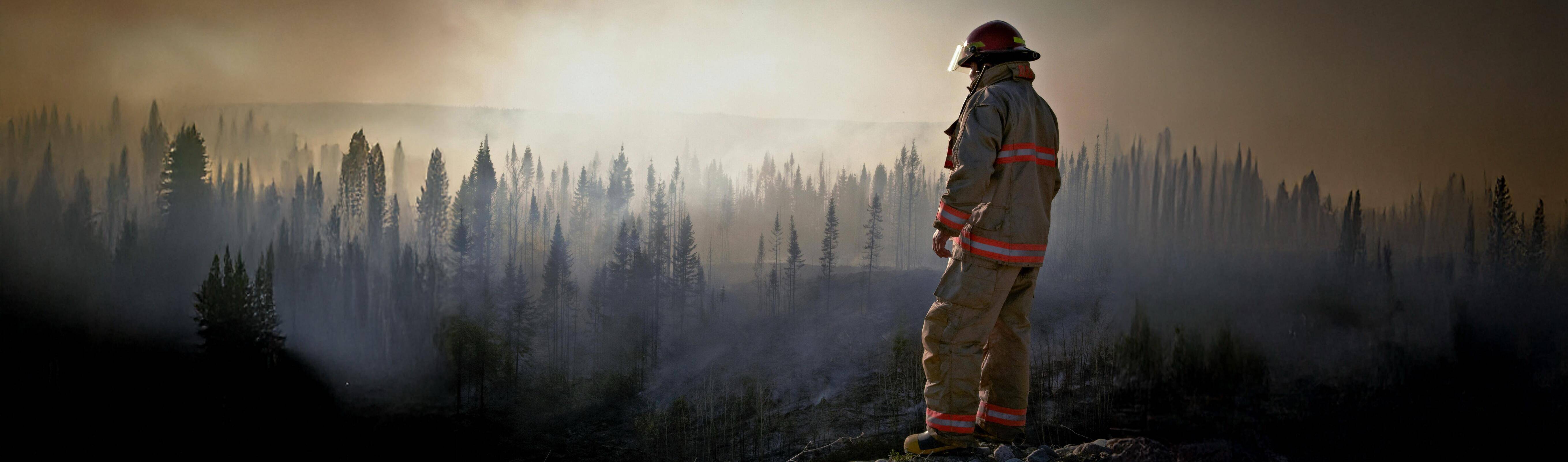
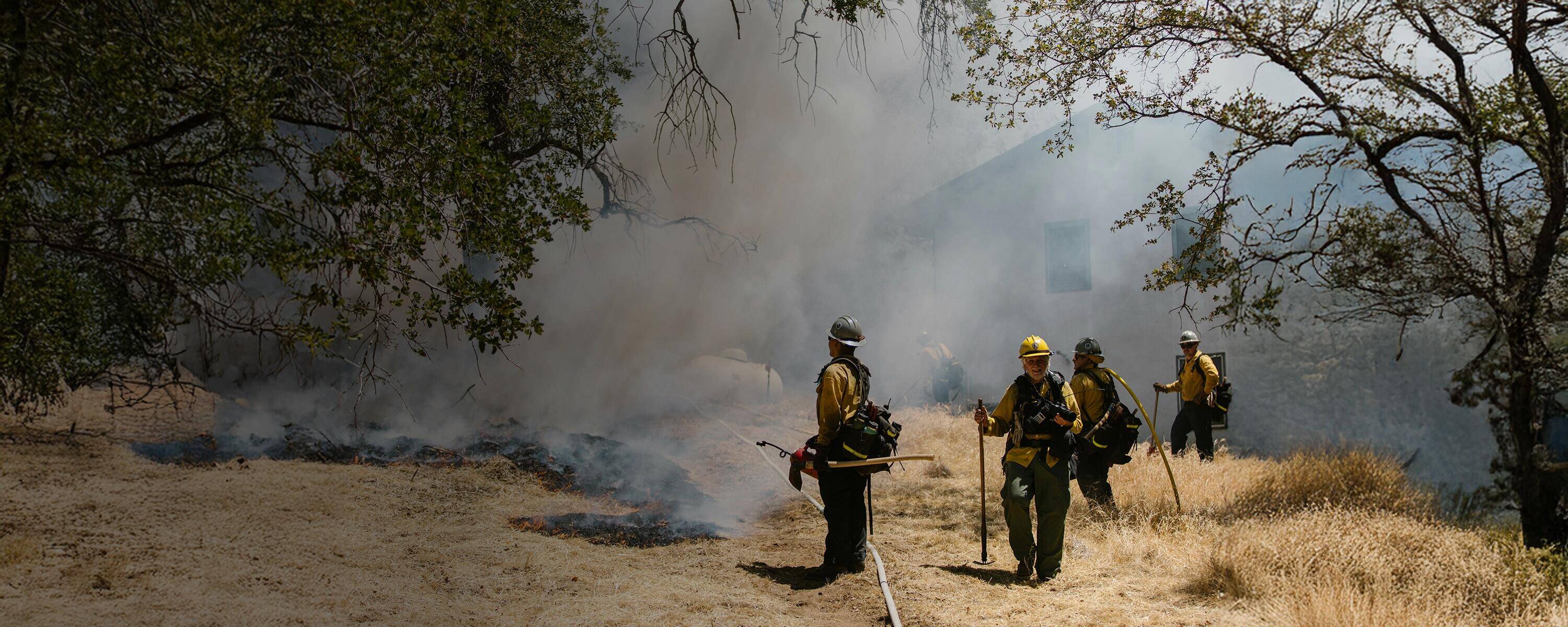
Firefighters use hoses, bulldozers, and controlled backburns to create firebreaks and stop the flames from advancing. In densely forested areas, crews may spend days building containment lines to prevent further spread. Ground crews are often the first line of defense, risking exposure to extreme heat, smoke, and unpredictable fire behavior.
Water and fire retardants can help slow the flames, but their effect is temporary, and some wildfires can only be managed rather than fully extinguished until weather conditions change. In 2020, the U.S. Forest Service spent nearly $3 billion on wildfire suppression alone, underscoring both the immense scale of these fires and the enormous financial and logistical challenges involved in combating them.
water cycles create long-term challenges for both nature and communities. Together, the human, political, and ecological consequences reveal the full scale of wildfire devastation.
The natural world suffers too. Fires destroy habitats, displace wildlife, and strip forests to bare soil, leaving ecosystems vulnerable for years. Repeated fires can permanently transform landscapes, turning forests into fire-prone shrublands and altering species composition. Smoke and pollutants spread for hundreds of miles, while soil erosion and disrupted
Entire neighborhoods can be destroyed within hours, displacing families and disrupting communities. In Los Angeles, evacuation centers fill quickly as residents flee advancing firelines, while in southern France, villages lose homes, crops, and livelihoods in just days. The financial toll is immense: wildfires in the U.S. caused over $15 billion in damages in 2020 alone, with European countries facing similarly rising costs. Beyond money, the social impact is profound—air quality deteriorates, hospitals see more patients with respiratory issues, and schools and businesses are forced to close. Politically, wildfires pressure governments to rethink land use, emergency response, and climate policy.
Containing and extinguishing wildfires is a complex and dangerous task. Firefighting teams employ multiple approaches depending on the fire’s size, location, and behavior.
Aerial support
Ground-based suppression:
Strategies on the front line
Fighting wildfires is complex. Steep terrain, shifting winds, and limited access slow crews, while extreme heat can let flames jump firebreaks.
The fight to stop the flames
Containment and control
“ The cost of a wildfire is measured not just in dollars but in lost habitats, displaced families and altered landscapes. ”
Spread and swallow
Wildfires can quickly consume vast areas of land.
What starts as a small blaze can expand over kilometers in just a few days, swallowing forests, fields, and even towns in its path. Entire valleys can be transformed into blackened wastelands, and landscapes that once supported wildlife and communities are reduced to ash.
equivalent to the annual emissions of some mid-sized countries, which further warms the planet and increases future fire risk. Globally, what were once rare catastrophic fires are now becoming increasingly frequent and severe.
summers have driven record-breaking fires in France, Spain, and Italy, with France experiencing extreme fire seasons in 2016, 2019, and 2023. At the same time, wildfires contribute to climate change, creating a feedback loop: the 2020 California fires alone released an estimated 112 million metric tons of CO₂,
Rising temperatures, prolonged droughts, and shifting rainfall patterns have extended fire seasons and increased fire intensity. In California, fire season now lasts months longer than in the 1970s, with the average annual area burned rising from roughly 70,000 acres to over 1.2 million acres by 2020. In the Mediterranean, hotter
Rising heat, rising risk
Climate change has fundamentally altered wildfire dynamics worldwide, making fires more frequent, intense, and longer-lasting than ever before.
When wildfires sweep through a region, the effects go far beyond the immediate flames.


vocs
Volatile Organic Compounds. Organic matter and soil high temperature combustion.
NOx
Nitrogen Oxides. Vegetation from trees and plants burning.
Carbon Monoxide
Carbon Monoxide. Incomplete combusting of organic materials.
PM2.5
Exposure can trigger asthma, bronchitis, and heart problems, especially in children and the elderly.
Particulate matter. Trees, plants and other organic materials burning.
Smoke and pollutants
Aerial support
In difficult-to-access terrain, helicopters and fixed-wing planes drop water or fire retardant to slow fires. This method was critical during the 2023 wildfires in southern France, where steep slopes and narrow valleys made ground access nearly impossible.
Technological monitoring
Advances in satellite imaging, drones, and AI-based fire modeling allow early detection and more precise risk assessment. Predictive models can help authorities allocate resources efficiently and alert communities at risk.
Wildfires and climate change fuel each other in a vicious circle.
Climate change is driving temperatures up and causing winter snowpacks to melt earlier than in previous decades.
Prolonged droughts are leaving forests drier for longer, extending fire seasons and making fires more likely.
Wildfires release massive amounts of carbon dioxide, which heats the planet further unless the cycle is broken.
The feedback loop
Start
Ignition point – a small blaze affects less than a hectare of forest.
After 6 hours
Fire expands to several hectares, the edges of the burning zone clearly visible.
After 12 hours
The blaze covers tens of hectares, spreading into nearby fields and scrubland.
After 48 hours
The burning zone reaches its maximum size, spanning several square kilometers before containment begins.
After 24 hours
Hundreds of hectares are now affected, with the fire reshaping the landscape.
In extreme cases a wildfire can move with astonishing speed. Some fires in California and Australia have advanced at up to 20 kilometers per hour. Faster than a person running at full sprint, far quicker than someone walking, and even outpacing cyclists on a regular road. While cars are faster, smoke, heat, and blocked roads can make escape extremely difficult, turning even seemingly safe routes into dangerous traps.
Wildfires
Cycling
Running
25
20
15
5
10
0
Average speed in km/h
The speed of wildfires compared
Smoke plume
Column of gases, ash, and water vapor rising from the flames. Carries firebrands (burning embers) that can start spot fires kilometers away.
Ground heat
Smoldering roots and soil layers can reignite even after flames pass.
Convective heat and radiant heat
Hot air rising preheats nearby fuels, helping the fire spread. Energy radiates outward, igniting vegetation meters away without direct contact.
Flame zone or fire front
The visible edge of the fire that consumes vegetation.
Temperatures can exceed 1,000 °C.
Pyromania is a mental disorder.
Arson is a crime.
It’s a rare impulse-control condition where individuals feel an uncontrollable urge to set fires for psychological relief or excitement.
Although both involve fire-setting, they are very different.
Fires are set deliberately to cause damage or achieve a goal (revenge, financial gain, or even covering up another crime).
Arson or pyromania?
A data driven special
wildfire
rising
Raging
The story of scorched earth and ever
growing risks
Text: ChatGTP Photos: Pexels, Freepik
Wildfires have become an increasingly visible and destructive force in recent years, capturing headlines from California to southern France. They test ecosystems and human resilience: are we ready for the next inferno?
an
Wildfires behave differently depending on the terrain. In grasslands, flames can race ahead with the wind. In forests, they may creep along the ground before exploding into the treetops. Shrublands often ignite in sudden, intense bursts. The type of terrain of the landscape determines both the speed and the scale of the fire.
Temperatures within the flames can exceed 1,100°C, enough to destroy flora, fauna, and topsoil. In Los Angeles, for example, the combination of chaparral-covered hills and strong Santa Ana winds has historically created a perfect recipe for rapidly spreading fires.
Wildfires are uncontrolled fires that occur in natural landscapes. Unlike controlled burns, which are carefully managed by forestry services, wildfires spread unpredictably, consuming vegetation and even entire ecosystems.
Tracing the origins
How the flames ignite and spread across landscapes
Wildfires ignite through a combination of natural and human-induced causes, each contributing in different ways depending on region and season.
From spark to inferno
Wildfire
causes
Lightning strikes are among the primary natural triggers, accounting for roughly 10–15% of wildfires worldwide., while volcanic activity and decaying vegetation can also ignite flames. In remote regions, these blazes often spread for days before they’re detected.
Arson accounts for 5–10% of wildfires globally. Although less frequent than accidental fires, deliberately set fires can escalate rapidly under dry conditions.
In many regions, human activity is the leading cause of wildfires. In California, estimates suggest that around 85–90% of fires are sparked by accidents, such as unattended campfires, discarded cigarettes, power line malfunctions, or agricultural burns that escape control.
Intentional acts
Human accidents
Natural causes
The aftermath
After the dust settles: what wildfires leave behind
The spendings of U.S. Forest Service
on wildfire suppression alone
$ 3,000,000,000
Technological monitoring
Wildfire costs by Country
The correlation between average global temperatures, annual acres burned and number of wildfires over 50 years
While firefighting focuses on containing flames, the greater challenge lies in preventing wildfires before they ignite and preparing communities to withstand them.
Staying ahead of the flames
The anatomy of a wildfire
Wildfires have distinct zones that interact in powerful ways.
Flames and heat shape the spread of the fire while smoke carries pollution and burning embers far beyond the front line.
Wildfires are more than natural disasters: they test how well we prepare, manage our landscapes and act on climate change. They show the fragility of ecosystems and communities, and the difference between destruction and resilience lies in how we respond, adapt and take action before the next fire begins.
Reduce fuel loads and slow fire spread. In southern France, crews conduct winter burns to clear dry brush and limit summer fire risks.
Address the root causes of hotter, drier conditions, with long-term measures like the EU’s emission reduction targets helping limit future fire severity.
Climate action
Help prevent human-caused ignitions and speed evacuations. In Los Angeles, campaigns and text alerts guide residents during high-risk days.
Making homes more fire-resistant. After California’s 2018 Camp Fire, new rules required fireproof roofing and defensible space around houses.
Community awareness and early-warning systems
Building codes and land planning
Controlled burns, forest thinning, and firebreaks
Firefighters use hoses, bulldozers, and controlled backburns to create firebreaks and stop the flames from advancing. In densely forested areas, crews may spend days building containment lines to prevent further spread. Ground crews are often the first line of defense, risking exposure to extreme heat, smoke, and unpredictable fire behavior.
Water and fire retardants can help slow the flames, but their effect is temporary, and some wildfires can only be managed rather than fully extinguished until weather conditions change. In 2020, the U.S. Forest Service spent nearly $3 billion on wildfire suppression alone, underscoring both the immense scale of these fires and the enormous financial and logistical challenges involved in combating them.
water cycles create long-term challenges for both nature and communities. Together, the human, political, and ecological consequences reveal the full scale of wildfire devastation.
The natural world suffers too. Fires destroy habitats, displace wildlife, and strip forests to bare soil, leaving ecosystems vulnerable for years. Repeated fires can permanently transform landscapes, turning forests into fire-prone shrublands and altering species composition. Smoke and pollutants spread for hundreds of miles, while soil erosion and disrupted
Entire neighborhoods can be destroyed within hours, displacing families and disrupting communities. In Los Angeles, evacuation centers fill quickly as residents flee advancing firelines, while in southern France, villages lose homes, crops, and livelihoods in just days. The financial toll is immense: wildfires in the U.S. caused over $15 billion in damages in 2020 alone, with European countries facing similarly rising costs. Beyond money, the social impact is profound—air quality deteriorates, hospitals see more patients with respiratory issues, and schools and businesses are forced to close. Politically, wildfires pressure governments to rethink land use, emergency response, and climate policy.
Containing and extinguishing wildfires is a complex and dangerous task. Firefighting teams employ multiple approaches depending on the fire’s size, location, and behavior.
Aerial support
Ground-based suppression:
Strategies on the front line
Fighting wildfires is complex. Steep terrain, shifting winds, and limited access slow crews, while extreme heat can let flames jump firebreaks.
The fight to stop the flames
Containment and control
Intentional acts
Arson accounts for roughly 5–10% of wildfires globally. Although less frequent than accidental fires, deliberately set fires can escalate rapidly under dry conditions,
“ The cost of a wildfire is measured not just in dollars but in lost habitats, displaced families and altered landscapes. ”
Spread and swallow
Wildfires can quickly consume vast areas of land.
What starts as a small blaze can expand over kilometers in just a few days, swallowing forests, fields, and even towns in its path. Entire valleys can be transformed into blackened wastelands, and landscapes that once supported wildlife and communities are reduced to ash.
equivalent to the annual emissions of some mid-sized countries, which further warms the planet and increases future fire risk. Globally, what were once rare catastrophic fires are now becoming increasingly frequent and severe.
summers have driven record-breaking fires in France, Spain, and Italy, with France experiencing extreme fire seasons in 2016, 2019, and 2023. At the same time, wildfires contribute to climate change, creating a feedback loop: the 2020 California fires alone released an estimated 112 million metric tons of CO₂,
Rising temperatures, prolonged droughts, and shifting rainfall patterns have extended fire seasons and increased fire intensity. In California, fire season now lasts months longer than in the 1970s, with the average annual area burned rising from roughly 70,000 acres to over 1.2 million acres by 2020. In the Mediterranean, hotter
Rising heat, rising risk
Climate change has fundamentally altered wildfire dynamics worldwide, making fires more frequent, intense, and longer-lasting than ever before.
When wildfires sweep through a region, the effects go far beyond the immediate flames.